
Health Informatics & Applied AI

[ ABOUT ME ]
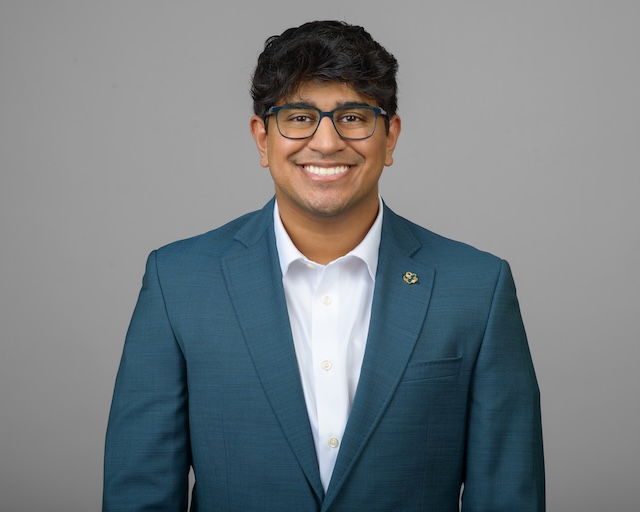
Jay Nagabhairu professional headshot

I'm Jay Nagabhairu, a Data Scientist with a health informatics background and hands-on experience building production large language model and retrieval-augmented generation systems for healthcare. My work spans electronic health record and claims data, natural language processing, and applied machine learning — always with an eye toward what makes a tool genuinely usable, not just technically impressive.

I've built conversational AI tools, document-intelligence systems using OCR, and computer vision applications inside complex, highly regulated healthcare data environments. That work taught me to build systems that are not just accurate, but auditable, explainable, and trustworthy — which matters enormously in healthcare.

I hold an MS in Health Informatics and Data Science from Georgetown University, completed with a 4.0 GPA. I'm currently exploring opportunities where I can bring this combination of technical depth and health domain expertise to a product-focused team.

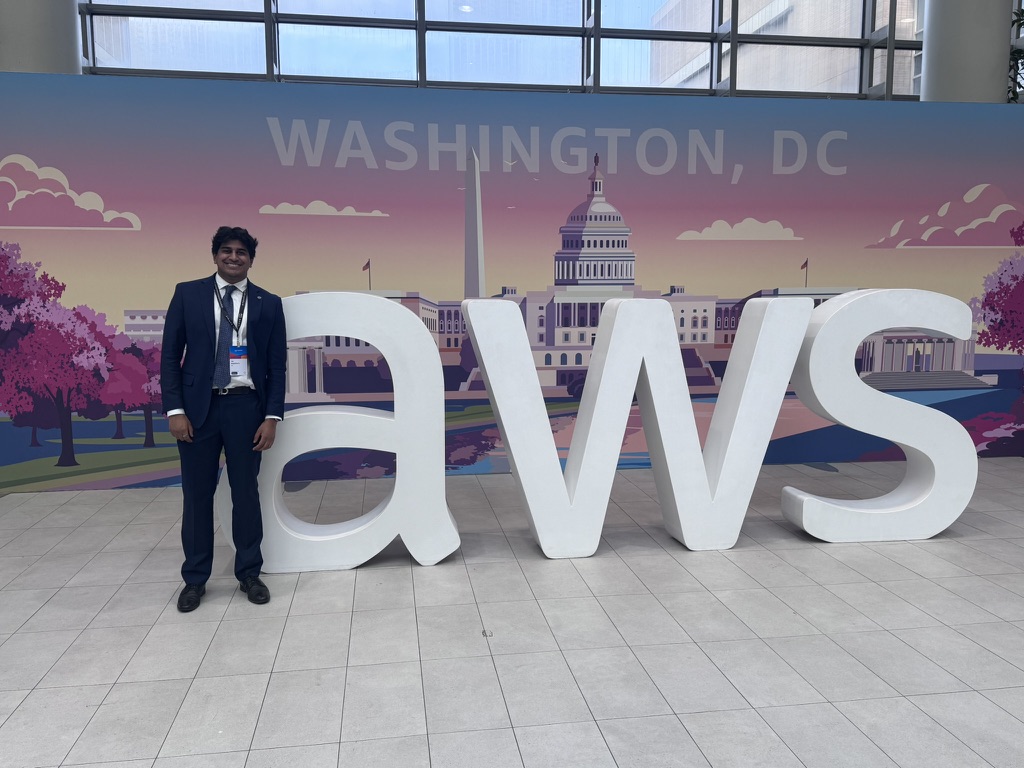
Jay Nagabhairu at the AWS Summit in Washington, DC
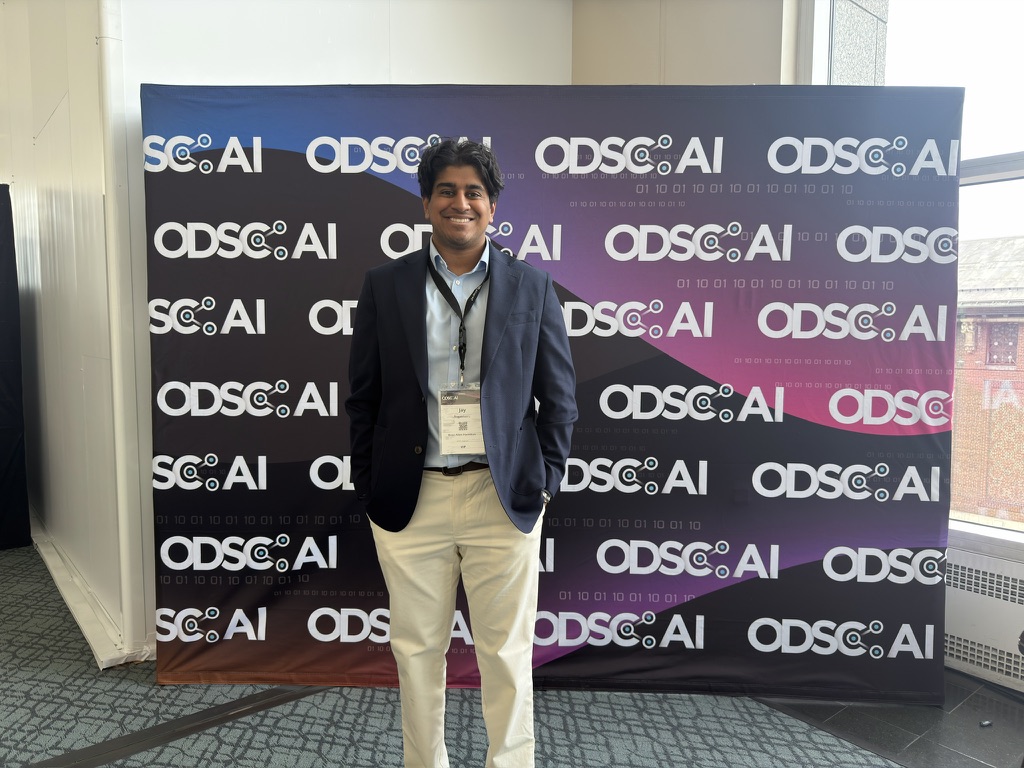
Jay Nagabhairu at the ODSC AI conference
Jay Nagabhairu with his parents at his Georgetown University graduation
Work_History
  1. Booz Allen Hamilton

    Oct 2025 — Present

    Data Scientist II & Senior Consultant

    • Design and maintain production RAG and LLM pipelines powering conversational AI tools used in healthcare contexts.
    • Build ML solutions on electronic health record and medical claims data — data cleaning, feature engineering, and model development.
    • Develop OCR-based document intelligence and computer vision systems that turn unstructured healthcare documents into structured data.
    • Work across the full data science lifecycle inside highly regulated environments, with close attention to governance, privacy, and security.
  2. ICA AI

    Jun 2025 — Present

    AWS Health Data Intern

    • Developed scalable AWS pipelines using S3, Glue, and DynamoDB to process mental health and SDOH datasets.
    • Built ML/NLP features with SageMaker and Bedrock, and designed dashboards with QuickSight and Streamlit.
  3. Knope

    Sep — Dec 2024

    Graduate Data Science Intern

    • Built a TensorFlow computer vision model to interpret drug test results with 92% accuracy.
    • Developed a geolocation-based analytics tool to detect drug-assisted assault hotspots.
  4. Care AI

    Feb — Jul 2023

    AI/ML Engineering Intern

    • Improved a CNN model for fall detection, deployed across 200+ medical sensors with 92% accuracy and 0.86 F1-score.
    • Built a Streamlit dashboard for real-time device monitoring used by 50+ engineers.
  5. Andor Health

    2020 — 2021

    Product & BI Intern (2 Roles)

    • Led R&D for a generative AI discharge planning assistant; filed 5 utility patents.
    • Created Azure-based Power BI pipelines and aggregated 30,000+ data blocks into dashboards.
Education

Georgetown University

MS in Health Informatics & Data Science · 4.0 GPA

University of Central Florida

BS in Data Science · 3.8 GPA

AI_Practice

How I use AI

Principle

Paired, Not Delegated

AI is a collaborator, not an author.

  • I write the problem and acceptance criteria before any code is generated.
  • I read every line that comes back.
  • If I can't explain it without the assistant present, it doesn't ship.
Principle

Reproducibility as a Design Constraint

If it can't be rerun to the same number, it isn't finished.

  • Everything lives in version control as readable text — I pair inside marimo, whose notebooks are pure Python files that diff cleanly in Git.
  • Reactive execution removes hidden state, so a bad suggestion breaks visibly instead of quietly corrupting a downstream result.
  • Environments are pinned, not described — package requirements ship with the work and run in sandboxed environments.
  • Seeds are set and recorded for any sampling, splitting, or stochastic step.
  • The exploration file is the handoff file — it also runs as a script, removing the translation step where silent errors get introduced.
Principle

One Piece at a Time

I don't ask a model to build a system.

  • Plan in plain language first.
  • Scope the smallest independently verifiable unit, pair on it, validate against real or known-good data, commit.
  • When something breaks, the search surface is one commit wide — not a whole pipeline.
Principle

Non-Negotiable Data Boundaries

PHI never enters a prompt.

  • I pair on structure, logic, and syntax — not on records.
  • Development uses synthetic or fully de-identified samples that mirror the schema.
  • Only approved and licensed tooling.
  • Credentials and internal identifiers stay out of context windows.
Principle

Verification

AI shifts effort from typing to verifying. I treat that as the job.

  • Tests before trust.
  • Statistical sanity checks after every transformation.
  • Provenance tracked for both data and code.
  • Anything consequential is reproduced by a second, independent path.
Principle

Attribution and Honesty

I say when AI was involved.

  • Commits and docs reflect reality — no generated code presented as hand-authored.
  • I flag components where AI involvement changes how a reviewer should evaluate them.
  • Provenance and licensing implications are called out, not glossed over.
Principle

Human Goal Oriented

Speed is only an asset when the direction was right.

  • Who is the output for?
  • What decision does it drive?
  • Who is harmed if it's wrong?
  • Does the population in the data resemble the population the system will serve?
Tools I work with
CodexClaudeWindsurfCopilotCursor
Records Powered1M+
CertificationsAWS ML Associate · GCP ML Engineer
WorkflowsAgile · Waterfall · Jira · SPM
Domain KnowledgeCancer Genomics · Computer Vision · ML Engineering · Data Visualization
Records Powered1M+
CertificationsAWS ML Associate · GCP ML Engineer
WorkflowsAgile · Waterfall · Jira · SPM
Domain KnowledgeCancer Genomics · Computer Vision · ML Engineering · Data Visualization